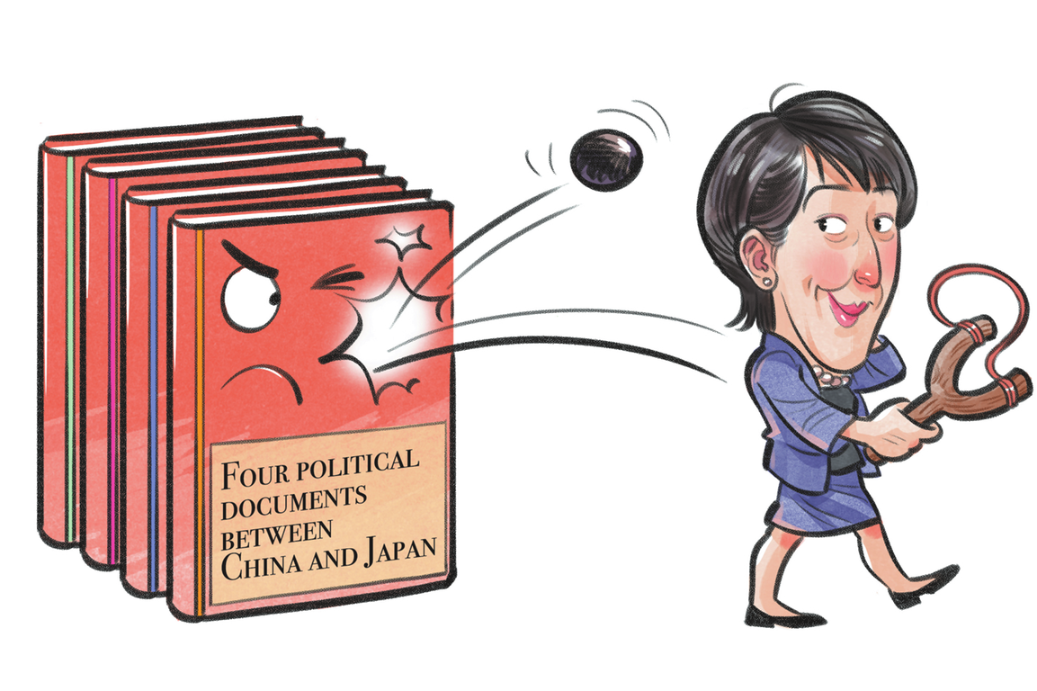



Blowing 'hot and cold' won't benefit the UK: China Daily editorial









UK Prime Minister Keir Starmer's Monday speech on China, delivered to business leaders in London's financial district, attempted to chart what he called a "serious approach" toward Beijing — one that rejects both the "golden age" rhetoric of a decade ago and the confrontational "ice age" posture adopted by his predecessors. Yet his assertion that China poses a "national security threat" to the United Kingdom immediately casts doubt on whether his government truly intends to stabilize and advance the trajectory of China-UK relations.
The Chinese embassy in the UK responded unequivocally. As the embassy's spokesperson said, China firmly opposes the British government's spreading of the so-called "China threat theory" and its unfounded accusations, as well as its interference in the country's internal affairs. China has one of the strongest records on peace and security among major countries and its development, rather than being a "threat" to any country, creates opportunities for shared progress.
Starmer's remarks risk undermining the stabilizing momentum that has begun to shape bilateral ties since the Labour government took office. It is imperative that the UK side abandon its two-faced stand: sending positive signals on cooperation on the one hand, while casting aspersions on the other.
In this respect, Starmer's rhetoric on Hong Kong is particularly misguided. Hong Kong affairs are purely China's internal affairs. The UK has neither the right nor the qualification to make irresponsible remarks or to interfere in the affairs of the Hong Kong Special Administrative Region. Persistently dragging Hong Kong into China-UK discussions only creates unnecessary friction and violates the basic norms governing international relations.
What the UK needs now is not suspicion or ideological posturing, but confidence-building measures and pragmatic cooperation with China. In fact, since Starmer took office, bilateral interaction has made new progress, with strengthened dialogue and expanded cooperation in trade, investment, green development, finance and people-to-people exchanges.
A stable China-UK relationship serves both nations' interests. China is currently promoting high-standard opening-up, deepening reforms and creating new engines for sustainable growth — including the digital economy, new energy, modern services and financial sector. All these endeavors can benefit the UK.
Yet such cooperation cannot flourish in an atmosphere clouded by political accusations. Starmer asserts that the UK "will not trade security for economic access", but it should be equally clear that hyping up a slanted and baseless "security narrative" is not a substitute for serious policymaking.
Moreover, China and the UK — both permanent members of the United Nations Security Council — share responsibilities far beyond bilateral ties. In a world confronted by conflict, climate change, sluggish growth and governance deficits, major countries must work together to uphold the purposes and principles of the UN Charter, support multilateralism and contribute to global stability. China's positions on peace-building, development cooperation and global governance have been consistent and constructive. The UK should approach China's development with rationality and pragmatism, and refrain from allowing domestic political calculations to distort its foreign policy.
Starmer rightly noted that the UK's China policy has "blown hot and cold" for too long. An effective way to break this UK-propelled cycle is for his government to anchor its approach in the consensus reached by the leaders of both countries, adhere to mutual respect and noninterference, and reciprocate China's sincerity in seeking steady, healthy and mutually beneficial relations. The UK should view China as a partner rather than a threat, and focus on areas where both sides have broad common interests and shared global responsibilities.
Only through consistency, rationality and goodwill can China-UK relations move forward along the right path, benefiting not only the two peoples but also contributing positively to a world in need of stability and cooperation.