

'Silence Choir' gives voice to deaf children, opens hearts
Youngsters from remote mountainous area overcome hurdles, soar on concert stages










New horizons
In May 2017, just over three years after the choir was formed, its 14 members made their debut in the assembly hall of Lingyun county, performing a one-minute etude specially composed by Zhang for the occasion.
"The performance was far from perfect. But as the 'ah' sounds of varying pitches rose and fell like waves breaking on the shore, I realized that these children — there were 15 of them — had started to ride the tides of their lives — hesitantly, yet with joy," said Zhang, accompanying them on his self-invented instrument — a fusion of a bass guitar and a seven-stringed traditional Chinese instrument known as the guqin.
Two months later, the children arrived in Xiamen, Fujian province, to take part in its annual music festival. Their performance, extended from one minute to three, seemed almost secondary — everything else was so astonishingly new for them. It was the children's first time on a plane, their first visit to an amusement park, and their first glimpse of the sea.
"They didn't just glance at the water — they plunged straight in, despite never having learned to swim. One by one, we had to drag them back — it was chaotic, exhausting yet utterly exhilarating," Li recalled.
Among the audience at the choir's performance in Xiamen was a director from Beijing's Forbidden City Concert Hall. An invitation was soon extended, and on Aug 4, 2018, the children — some entering adolescence — found themselves standing on the stage of one of China's most venerated venues.
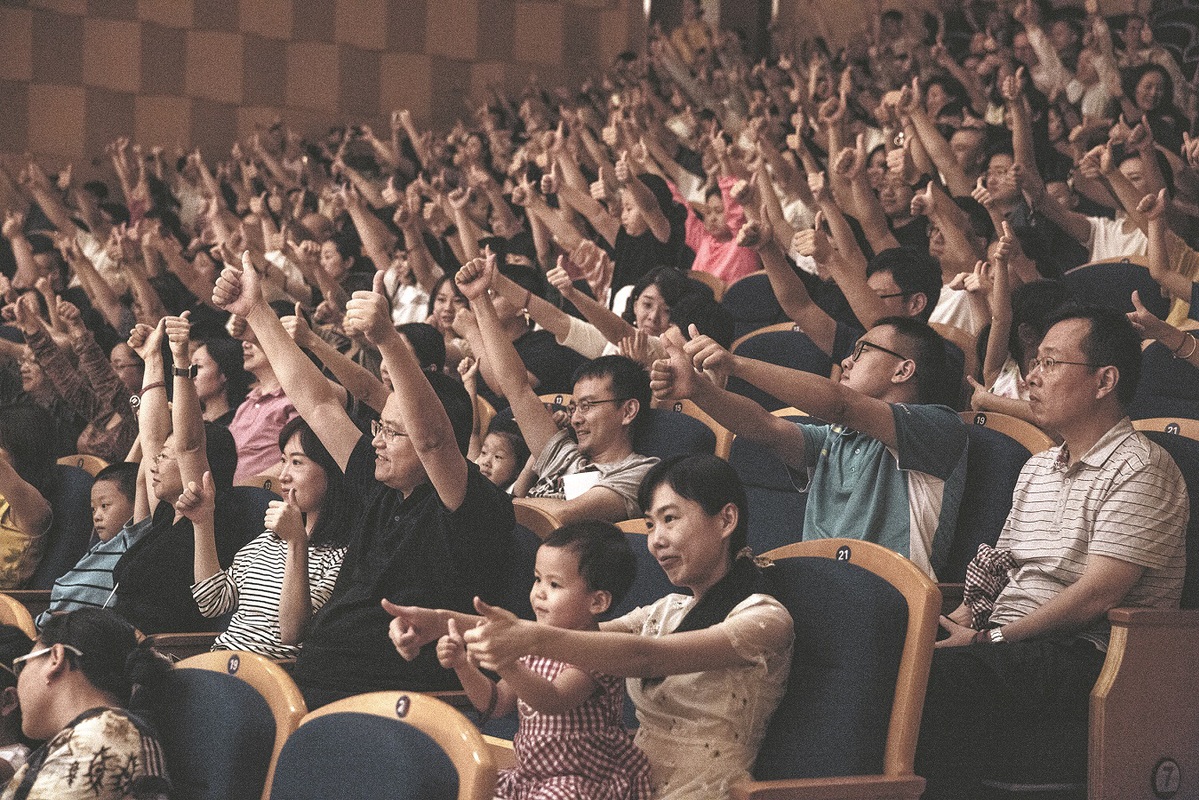
"The audience sat close to the stage — so close that by the end, nearly half were wiping away tears," Zhang recalled. This time, the piece was extended to 12 minutes.
The Beijing concert brought a wave of public attention.
"People spoke of it as a worthy act of charity," said Li. "But I keep asking myself — who were the givers, and who were the receivers? It's true that we helped the children step beyond their enclosed world. Yet through their voices — and their disabilities — they compelled us to confront the boundaries of our perception, as well as our own quiet inability to face our limitations, which can be debilitating in itself."
One thing Li has consistently refused is to enter the choir in competitions, because "our performers should not be judged by anyone — no matter how celebrated they may be as singers and musicians — who inhabit a hearing-centric world".
Back in their home county, people's attitudes toward the children changed dramatically.
"By going to Beijing, they've done something most of their fellow townspeople never have," Li said.
Then the coronavirus pandemic hit, bringing everything to a standstill. Some members left the choir; others, growing older, transferred from Lingyun School to a special-education high school in Guilin, a city in Guangxi, to continue their studies and learn vocational skills. Li and Zhang followed them there, settling into the new school and recruiting fresh members once the pandemic was over.