


The great thaw









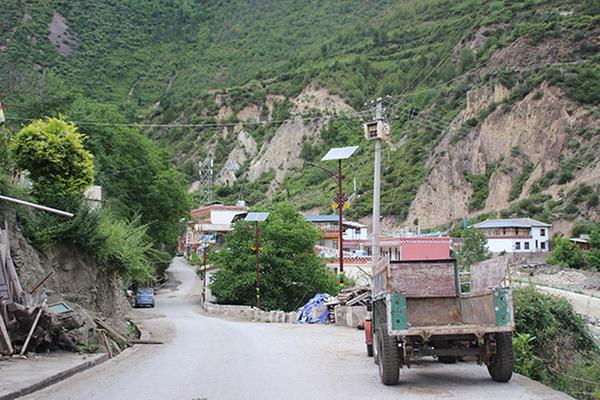 |
| Mingyong village in Deqen county, Yunnan province.[Photo by Shi Wenzhi/China Daily] |
"All this will affect the balance of energy in nature in the long term," Li Xichen, a senior researcher at the Institute of Atmospheric Physics, an affiliate of the Chinese Academy of Sciences, says in Beijing of oceanic and atmospheric circulations.
The world's coastal areas will likely take the worst hit.
Li, who has studied the Antarctic and Arctic oceans, says in western Antarctica, for instance, surface temperatures have also gone up by 5 degrees.
The Antarctic region contains some 500 gigatons of freshwater in glaciers.
With glacial melting potentially irreversible, one sure way to deal with the situation is pursuing sustainable development. The 2015 Paris Agreement, which seeks to rein in global warming, has been ratified by most countries. In June, US President Donald Trump announced his country's exit from the accord, a move widely criticized by governments and scientists.
Some experts are suggesting climate modeling as a supplement to emission cuts to combat global warming.


- Beijing office backs Hong Kong court in Jimmy Lai conviction
- Xi's article on expanding domestic demand to be published
- Beijing Institute of Technology adds journals to SCI Expanded
- Jiangsu county builds partnerships in Beijing to scale up innovations
- Central authorities voice firm support for verdict on Jimmy Lai
- Ex-teacher gets 18 years for rape, molestation of student