


Yangtze set to become a 'highway on the water'









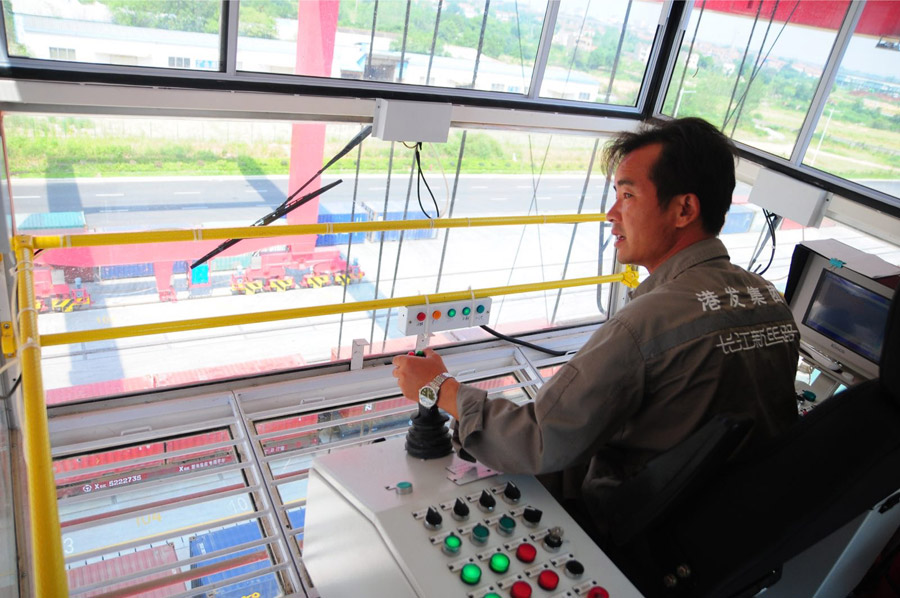
"The water-rail logistical model will reduce costs by 30 percent compared with truck-train transportation," said Wang Ting, director of the operations and management department of Yangtze River New Silk Road International Logistics, which operates the center.
At present, the center handles 30,000 twenty-foot equivalent unit containers a year, but the company is planning an expansion that will add two more loading centers to the port's docks.
"With the completion of the second loading site, the port could handle 200,000 TEU containers a year using the water-rail model," Wang said.
She added that the ultimate goal is 4 million TEU containers, about 40 percent of the estimated number of containers that will arrive at the port by 2035.
Last year, Wuhan's ports handled more than 100 million metric tons of goods, a year-on-year rise of 11.3 percent, and the number of TEU containers reached 1.36 million, which was a record for the city.
New ship models
In addition to welcoming more trains in the near future, Yangluo Port is expected to see more large cargo ships docking as early as the latter half of next year.
Current models of seafaring vessels with displacements of 10,000 tons and higher usually dock at ports along the lower reaches of the Yangtze because the waterway gradually becomes more meandering and the colossal ships are unable to navigate the zigzagging turns.


- Fujian Coast Guard patrols near Kinmen are legitimate, necessary: Chinese mainland spokesperson
- Chinese researchers achieve thorough simulation of Martian dust cycle
- China's State Council appoints, removes officials
- Beijing court tackles legal disputes in ice and snow economy
- New high-speed rail cuts Nanning-Vietnam border travel time to 75 mins
- GBA cultural investment conference secures 6 billion yuan