


New plan will recast Sino-ASEAN ties









The recommendations for China's forthcoming 15th Five-Year Plan (2026-30), adopted at the fourth plenary session of the 20th Central Committee of the Communist Party of China in October, is more than a blueprint for the country. Its broad directions — from technological innovation to green transition and high-quality opening-up — have tangible implications for Southeast Asia, where China's economic and strategic interests are deeply intertwined.
Beijing is clear that the next five years will be characterized by both opportunities and challenges, with heightened uncertainty in relations among major powers. Technological rivalry, competition over the international monetary order, and the restructuring of global manufacturing will shape great-power competition. Southeast Asia — China's largest trading partner and a vital extension of its industrial and security landscape — will inevitably feel the reverberations.
Following the Central Conference on Work Related to Neighboring Countries, President Xi Jinping's state visits to Vietnam, Malaysia and Cambodia underscored ASEAN's central position in China's regional strategy. Under the new plan, China aims to deepen high-quality cooperation with ASEAN, with a renewed focus on integration and sustainable connectivity.
As Southeast Asia becomes more important to China's national interests, competition between Beijing and Washington for regional influence will inevitably increase, as symbolized by the unusually high-profile participation of the US president in the ASEAN Summit in Malaysia in October.
For Southeast Asian countries, the traditional approach of sectoral hedging — relying on the US as a security provider and China as an economic partner — is becoming increasingly untenable. As major countries compete in more domains and their interests become structurally intertwined, maintaining balanced ties without displeasing either will become far more difficult. ASEAN member states must craft differentiated strategies for security, technology and economic governance to navigate this narrowing path.
The 15th Five-Year Plan identifies the development of new quality productive forces — intelligent, green, and integrated — as the cornerstone of China's future economy. These include emerging pillar industries such as new energy, advanced materials, aerospace, and low-altitude economy, as well as frontier sectors like quantum technology, biomanufacturing, hydrogen and fusion energy, brain-computer interfaces, embodied intelligence and 6G communications.
The upgrading of the China-ASEAN Free Trade Area (CAFTA) to version 3.0, which places the digital economy at the top of nine new chapters, reflects a shared commitment to intelligent connectivity. Under a State-led innovation framework, China's eastern coastal provinces will focus on technology development, while provinces and regions such as Guangxi, Yunnan and Guangdong — with strong ties with Southeast Asia — will serve as application and transformation hubs bridging China with Southeast Asia. This geographical division of labor may accelerate the alignment of technologies, industries and regulatory frameworks across the region.
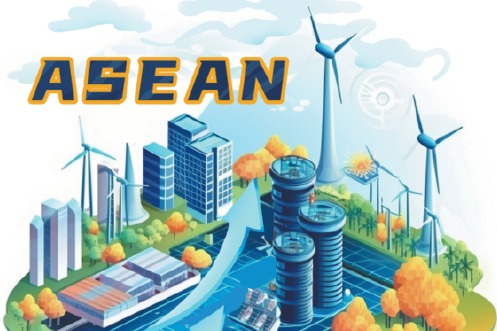
Green cooperation in ASEAN has shifted from traditional manufacturing to integrated industrial upgrading. In 2023, trade in green products between China and ASEAN exceeded $48 billion. But the relocation of Chinese photovoltaic capacity to Southeast Asia, once seen as a success, has revealed structural vulnerabilities. Due to the new US tariff measures, the solar power industries of Cambodia, Malaysia, Thailand and Vietnam have faced severe disruptions.
This underscores the need for both sides to move toward a more resilient and synergistic model — aligning standards, capital, supply chains and carbon market mechanisms while expanding cooperation in renewable energy, sustainable infrastructure, green finance and resilient cities.
Beyond economics, China's new plan also highlights the internationalization of its cultural industries. In recent years, two distinct models of Chinese cultural outreach have emerged in Southeast Asia. The first, exemplified by Labubu, represents a modern and innovative aesthetic detached from traditional cultural symbols, allowing it to gain popularity among global youth without triggering cultural sensitivities. The second, exemplified by Black Myth: Wukong, builds on classical Chinese motifs and appeals to audiences with cultural or ethnic affinity. Both models share a key feature: they are market-driven rather than state-directed, signaling the commercialization and diversification of China's cultural exports.
The success of China's engagement with Southeast Asia during the 15th Five-Year Plan period will depend on whether both sides can move beyond sectoral cooperation toward systemic integration in technology, sustainability and culture. Leveraging frameworks such as the Regional Comprehensive Economic Partnership and the upgraded CAFTA 3.0, China can enhance policy coordination, investment facilitation, and rule-making synergy with ASEAN. For Southeast Asia, the coming years may thus be less about choosing sides, and more about adapting to a shifting regional landscape — with intelligence, flexibility and a shared sense of purpose.
The author is an associate professor at the Institute of International Studies of Fudan University. The views don't necessarily reflect those of China Daily.
If you have a specific expertise, or would like to share your thought about our stories, then send us your writings at opinion@chinadaily.com.cn, and comment@chinadaily.com.cn.